
Rudolph de Harak | Modern Graphic Designer and Visual Systems Pioneer
Rudolph de Harak Didn’t Chase Design Fame. He Built Clarity Instead.

Modern design history is full of loud names. Big personalities. Big egos. Big signatures.
Rudolph de Harak wasn’t interested in any of that.
He didn’t chase attention. He didn’t decorate for applause. He didn’t turn himself into a brand. He built systems, cut away excess, and let the work speak quietly and confidently for itself. That’s probably why so many people recognize his thinking but not his name.
And that’s exactly why designers still look up to him.
Before Design School, There Was War
Rudolph de Harak was born in 1924 and came of age during a time when careers were interrupted by history. Before graphic design became his life’s work, World War II got there first.
He served as an infantryman in Europe. No theory. No abstraction. Just survival, structure, and discipline. When the war ended, he came back with clarity about one thing: he didn’t want a life built around heaviness. He wanted to work with ideas, with form, with communication. Preferably with nothing heavier than a pencil.
That mindset stayed with him.
There was no clean entry point into design waiting on the other side of the war. No polished path. He was self-taught, learning by observation, experimentation, and sheer persistence. He worked in studios, absorbed what he could, and paid attention to what felt honest versus what felt ornamental.
That difference mattered.
Learning by Looking, Not Decorating
De Harak’s education didn’t come from credentials. It came from exposure.
In Los Angeles, he was introduced to modernist thinking through lectures, museums, music, photography, and conversations. He saw firsthand that design could be more than selling things. It could organize information. Shape environments. Communicate ideas without shouting.
Modernism wasn’t a style to him. It was a filter.
What stayed. What went. What mattered.
This wasn’t about making things look cool. It was about making them make sense.

From West Coast Curiosity to New York Discipline
By the early 1950s, de Harak moved to New York City. It was louder, faster, and less forgiving. Perfect conditions for someone obsessed with clarity.
He worked in editorial design, including a long run of collage-based illustrations that felt improvised, experimental, and surprisingly restrained at the same time. Think jazz structure, not chaos. Improvisation with rules.
Those collages were early signs of what would define his career: a willingness to explore, paired with an unwillingness to indulge.
Around this time, he opened his own studio. That decision mattered. Owning his agency meant owning his point of view. No trends by committee. No dilution. Just a consistent, disciplined approach across everything he touched.
Record Covers That Didn’t Look Like Record Covers
One of the clearest examples of de Harak’s thinking lives in his record sleeve designs, including Nothing but Percussion for Westminster Records in 1961.

The cover doesn’t explain the music. It doesn’t illustrate it. It doesn’t soften it.
It confronts you with raw, abstract black form. Percussion, translated into motion and weight. Nothing decorative. Nothing extra. Just rhythm, tension, and space.
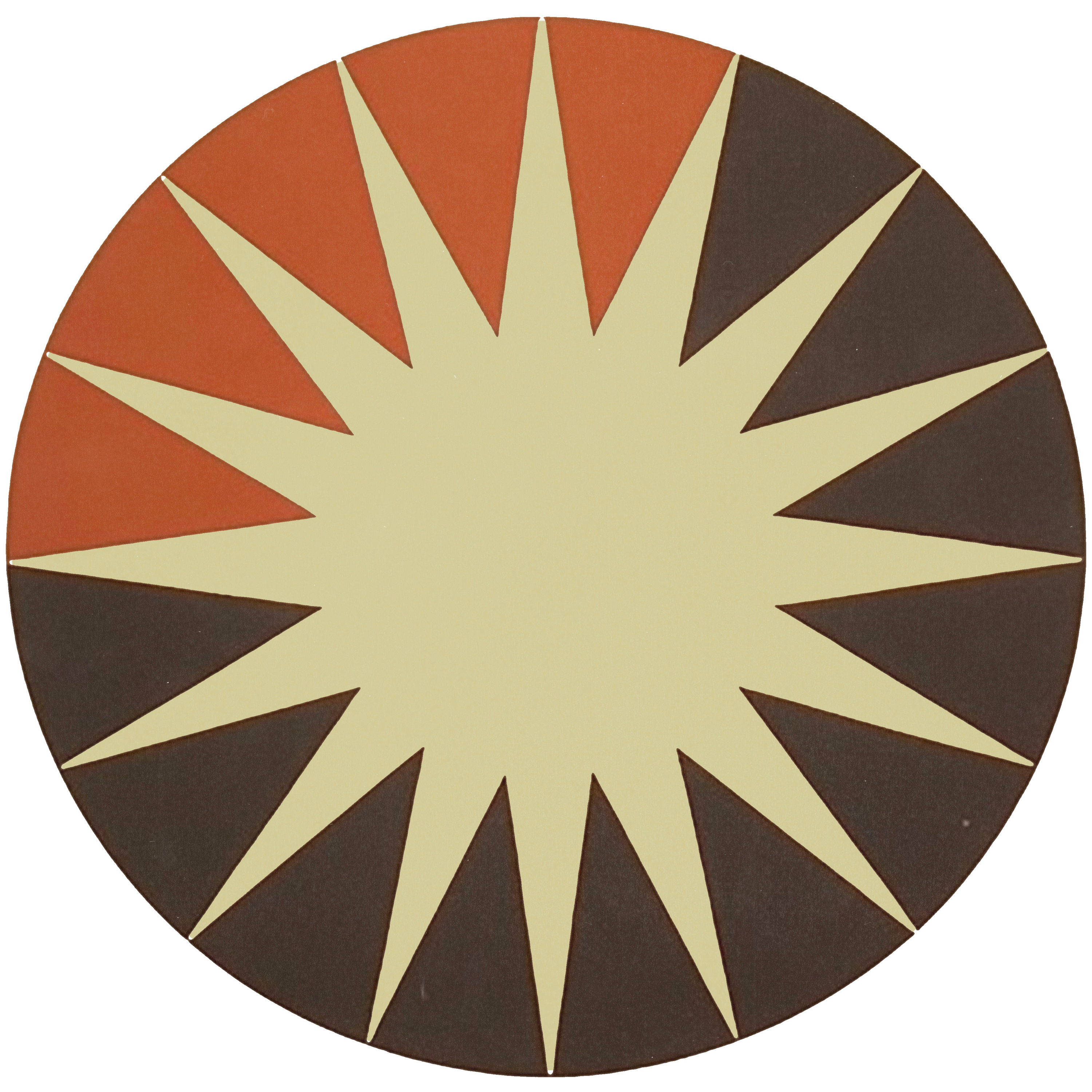
Across more than 50 record covers for Westminster, Columbia, Oxford, and Circle Records, de Harak developed a visual language that was instantly recognizable. Bright geometry. Strong abstraction. Confident restraint.
You didn’t need to know his name. You knew the thinking.
Owning an Agency Without Owning the Spotlight
De Harak ran his own design studio in New York for decades. The scope was massive. Trademarks. Posters. Books. Exhibitions. Environmental graphics. Signage. Institutional systems. Even large-scale architectural integrations.
He designed the ground floor and exterior graphic program for an office skyscraper at 127 John Street in Manhattan, including a massive digital clock that still functions today. He worked on world’s fairs, museum exhibitions, and national pavilions.

And yet, he never positioned himself as the star.
The work was the work.
That restraint is rare now. It was rare then too.
A Style Built on Subtraction
If you’re looking for a signature look, you’ll miss the point.
De Harak’s style wasn’t visual flair. It was editorial judgment. Knowing when abstraction clarified meaning and when realism did the job better. Knowing when typography should lead and when it should disappear.

Rudolph de Harak American modernist graphic design 
Rudolph de Harak American modernist graphic design 
Rudolph de Harak American modernist graphic design 
Rudolph de Harak American modernist graphic design 
Rudolph de Harak American modernist graphic design 
Rudolph de Harak American modernist graphic design
He believed cutting away unnecessary elements wasn’t minimalism for its own sake. It was responsibility.
Design, to him, was about helping people understand the world around them. Books. Buildings. Exhibits. Information. Time.
Even his experiments, like the clocks that later entered MoMA’s permanent collection, were rooted in function. Time wasn’t a metaphor. It was something to be structured.
Why Designers Still Look Up to Him
Rudolph de Harak never became a pop-culture design figure. He didn’t try to be.
But his influence runs deep. Especially among designers who care less about trends and more about longevity. People who believe clarity ages better than cleverness. People who understand that restraint takes more confidence than decoration.

He proved you could be self-taught, independent, and principled. That you could own your agency without selling out your thinking. That you could move across disciplines without losing your center
That kind of career isn’t loud. It’s durable.
Legacy
Rudolph de Harak’s work still feels current because it was never chasing the moment. It was chasing understanding.
He stripped away what didn’t matter. He trusted systems. He respected the viewer. He believed design could be both rational and deeply human.
And that’s why, decades later, his work doesn’t feel dated.
It feels necessary.


Comments